
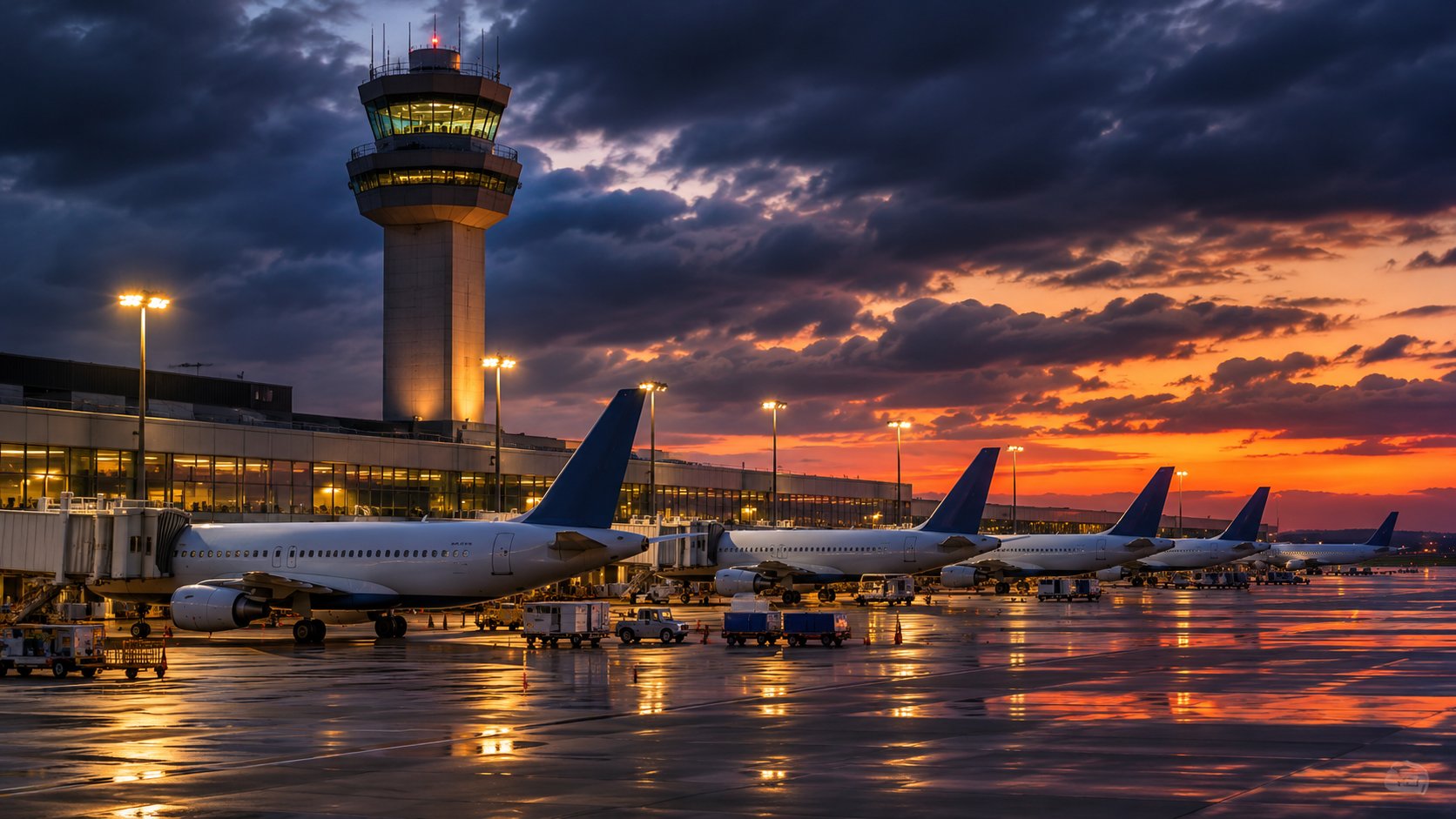
Imagine waking up to discover that airplanes across the United States have been ordered to remain on the ground—not because of a hurricane or an attack, but because something went wrong during routine maintenance on the communications network supporting air traffic control. That is the troubling scenario officials described following the November 13, 2026 FAA disruption.
What Secretary Sean Duffy Said Happened
Transportation Secretary Sean Duffy said maintenance work replacing aging copper telecommunications infrastructure with newer fiber-optic technology was associated with communications instability. The contractor involved was L3Harris. Officials described abnormal network connection attempts that interfered with other network equipment and affected communications and radar-data delivery. At the time of the update, investigators had not established whether faulty equipment or an installation error was responsible.
Officials reported no evidence that the incident was a cyberattack. That distinction matters: a serious infrastructure failure does not automatically mean an adversary caused it.
How Air Traffic Control Works
Airport towers manage runway movements and nearby traffic. Terminal approach facilities coordinate arriving and departing aircraft, while en route centers manage flights traveling between regions. Controllers depend on reliable voice communications, surveillance information and coordination across facilities. Radar equipment can still function even when a communications problem interferes with delivering its information to controllers.
Why Older Technology Matters
Legacy time-division multiplexing (TDM) networks carry multiple communications streams by allocating time slots. Newer internet-protocol networks move information in packets. Replacing old infrastructure across a live, safety-critical system is far more complicated than changing a home router: old and new equipment must coexist, and maintenance must be carefully tested and managed.
Why Grounding Aircraft Was the Safer Decision
Intermittent failures can be particularly difficult for aviation operations. Controllers need timely, dependable information, not merely systems that work most of the time. The FAA’s ground stop was a safety precaution intended to prevent a communications disruption from becoming an accident. Controllers and pilots continued managing aircraft already in flight using established procedures.
What Might Potential Adversaries Learn?
This event does not establish that any foreign government or criminal organization attacked the FAA. It does, however, renew a broader national-security question: how well can essential services contain an accidental failure before its effects spread? A disruption in aviation can ripple through crew schedules, aircraft positioning, connections and freight operations long after the original technical issue is resolved.
The concern is not unique to aviation. Electricity, water, hospitals, emergency communications and financial systems all depend on complex technology and service providers. Their architectures and safeguards differ, so this FAA event does not prove that other systems share an identical vulnerability. It does show why resilience, redundancy and careful change management deserve sustained attention.
What America Should Ask Next
- How thoroughly was the maintenance tested before deployment?
- What safeguards limited the effects of the malfunction?
- How did backup systems and emergency procedures perform?
- What independent review will establish the root cause?
- How will modernization projects demonstrate measurable improvements in resilience?
A Final Thought From Dad
Most of us buy an airline ticket and simply expect the system to work. The same is true when we flip a light switch or turn on a faucet. Those expectations are met because skilled people keep essential services running every day. The FAA disruption is a reminder to recognize their work—and to insist on reliable infrastructure, transparent investigations and practical improvements before the next emergency.
The question isn’t whether every technological failure can be prevented. It can’t. The question is whether we’ve built systems capable of containing failures before they become national emergencies. That’s a conversation worth having.
For more conversations about faith, family, preparedness and practical wisdom, visit A Conversation With Dad.
Sources
U.S. Department of Transportation — official FAA and Secretary Duffy updates; Federal Aviation Administration — background on air traffic operations.
Leave a Reply