
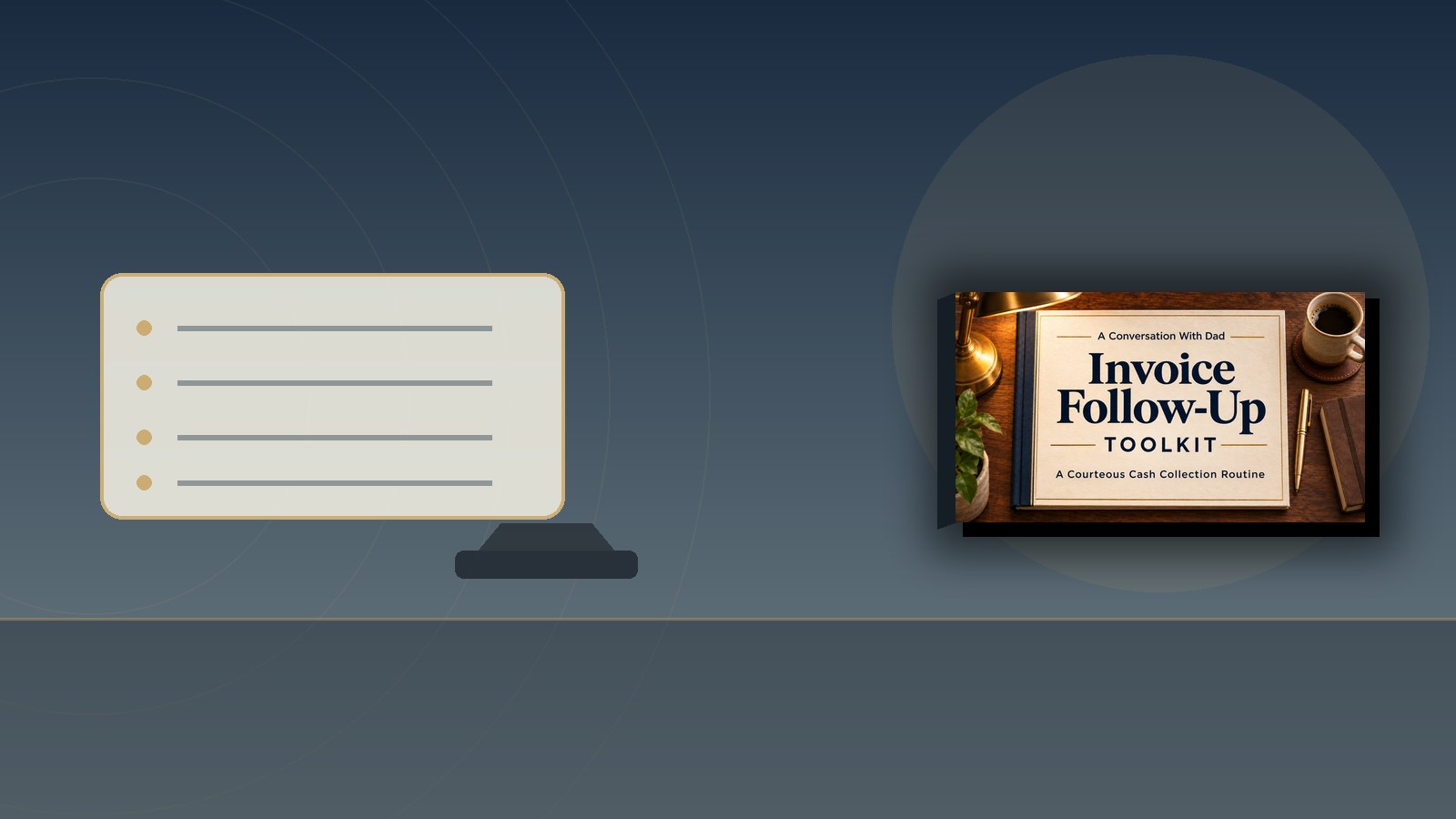
An overdue invoice can put pressure on a small business. It is tempting to send a sharper message right away, but the first useful step is usually quieter: check your records. A payment may be in transit, applied to another invoice, or tied to a question that needs attention.
Verify before you write
Compare the invoice, due date, amount, and payment status against your accounting system. Do not mark an estimate or disputed amount as collected. If the customer has raised a concern, pause routine reminders and follow the process your business uses to resolve it.
Use a predictable review schedule
- Review open invoices on set days.
- Send only the reminder that fits the verified status.
- Record the date and the next step in your approved system.
- Close the loop when a payment or dispute is resolved.
Keep the message factual and courteous. Avoid threats, invented urgency, unsupported fees, or repeated messages. If a matter moves beyond an ordinary reminder, get qualified advice about the rules that apply to your business and customer.
A consistent process helps you see what is still open and where a conversation needs a human decision. It does not promise payment, and it should never replace your accounting records.
The Invoice Follow-Up & Cash Collection Routine is listed at $19. It includes a blank invoice tracker, review steps, editable reminder scripts, a weekly worksheet, and setup instructions. It is an operational resource, not accounting or legal advice.
Leave a Reply