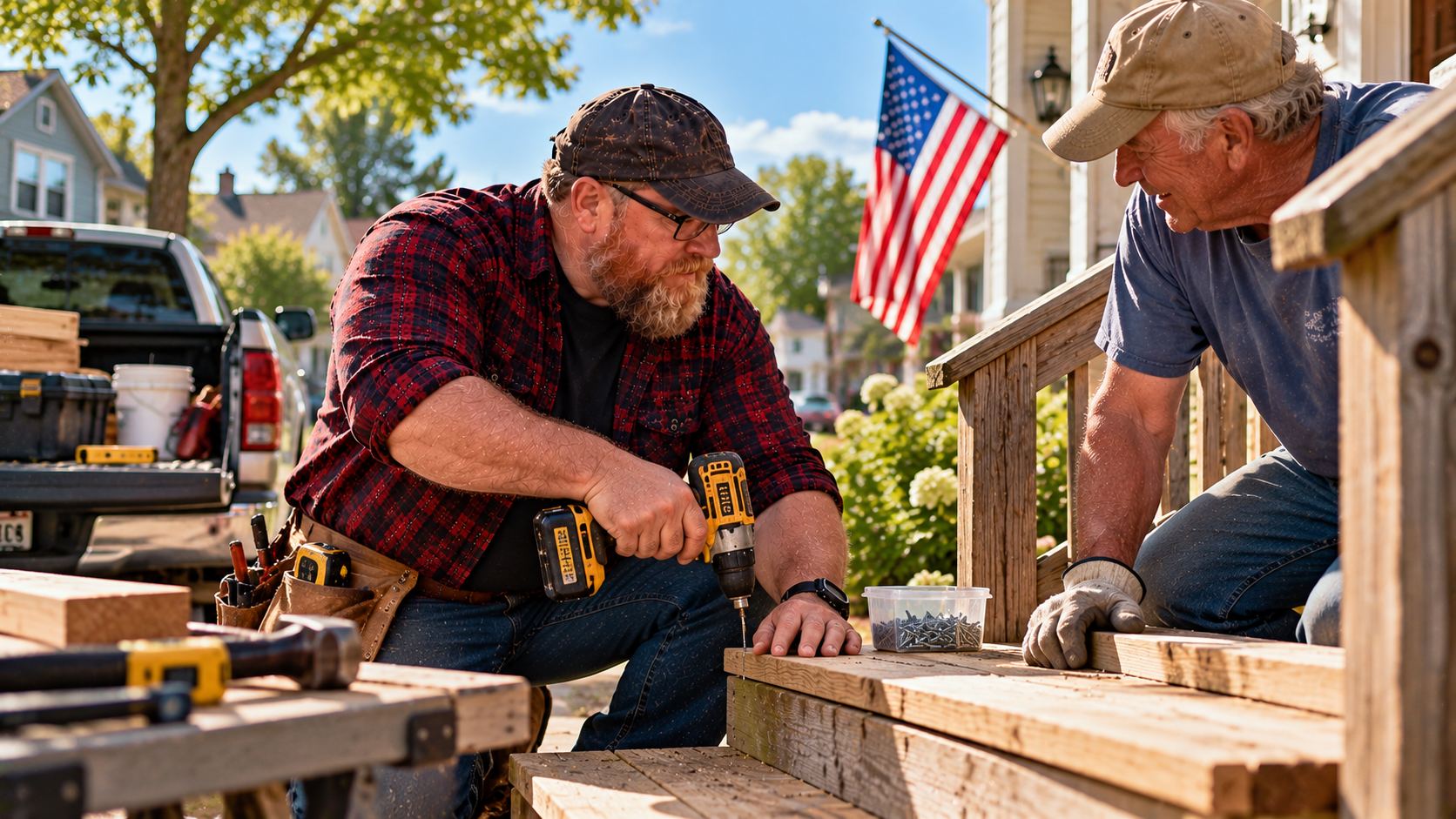
There was a time when a neighbor might knock on your door because he needed to borrow a wrench, return a pie plate, or tell you that a branch had come down in your yard.
Some of those visits were probably inconvenient. You might have been in the middle of supper or halfway through a project. But they also carried a simple message: we live near one another, and that means something.
We do not need to romanticize the past to recognize that community takes more than sharing a street address.
A Neighborhood Is Made of Small Exchanges
Community rarely appears all at once. It grows through repeated contact: a wave from the driveway, a conversation over the fence, a package brought inside before the rain, or a hand offered when somebody’s car refuses to start.
These moments build familiarity. Familiarity makes it easier to notice when somebody needs help. And that awareness can turn into action before a small problem becomes a crisis.
We often talk about community as though it were a service somebody ought to provide. We want safe streets, friendly neighbors, clean parks, and places where children can play. Those things matter, but they are also influenced by what ordinary residents are willing to contribute.
Help Does Not Have to Be Grand
You may not have the money or time to take on a major project. That is all right. Community is not a competition to see who can perform the biggest act of generosity.
It may be checking whether an older neighbor needs anything before a storm. It may be sharing a useful local resource with a family that just moved in. It may be picking up litter, attending a neighborhood meeting, or lending a tool with a clear understanding of when it should come back.
Sometimes the best help is simply asking a sincere question and listening to the answer. Do not assume everyone wants the same kind of assistance, and do not turn a small act of kindness into a debt the other person must repay.
Respect Makes Help Sustainable
Being neighborly does not mean abandoning boundaries. People need privacy, and good intentions do not give us permission to manage somebody else’s life. Offer help without insisting on control. Be considerate about noise, shared spaces, and the fact that other households may operate differently from yours.
A healthy community can include people who disagree, keep different schedules, and have different traditions. Respect does not require identical opinions. It requires recognizing that other people deserve consideration, too.
Romans 12:18 offers a practical principle: as far as it depends on you, live peaceably with all. That does not mean every conflict can be resolved by one person or that boundaries should disappear. It reminds us to take responsibility for our own conduct instead of waiting for everybody else to become easier to live with.
Put Down the Screen and Look Around
It is easy to know the latest argument happening across the country while knowing almost nothing about the people three doors away. Online information can be useful, but it cannot fully replace the local knowledge that comes from paying attention.
Learn the names of a few neighbors. Find out where the nearest community meeting is held. Notice who maintains the shared spaces and who might appreciate a hand. If you are new to an area, introduce yourself in a way that feels comfortable and respectful.
You do not have to become the unofficial mayor of the block. Start with one conversation and one useful action.
Build the Kind of Place You Want to Live
A good community is not made only by people who share our interests or see the world as we do. It is strengthened by people willing to contribute, solve practical problems, and treat one another with basic dignity.
That old-fashioned neighbor understood something worth keeping: you do not wait for community to arrive like a delivery. You help create it.
So look up from the front porch now and then. There may be somebody nearby who could use a hand, and there may be a good neighbor waiting for you to introduce yourself.
Same conversations. A brighter tomorrow.
For a related reflection, read about building stronger communities through everyday responsibility.
Leave a Reply