Faithful, Free & Ready | Part 1 of 7
Faith in God. Love of Country. Responsibility at Home.
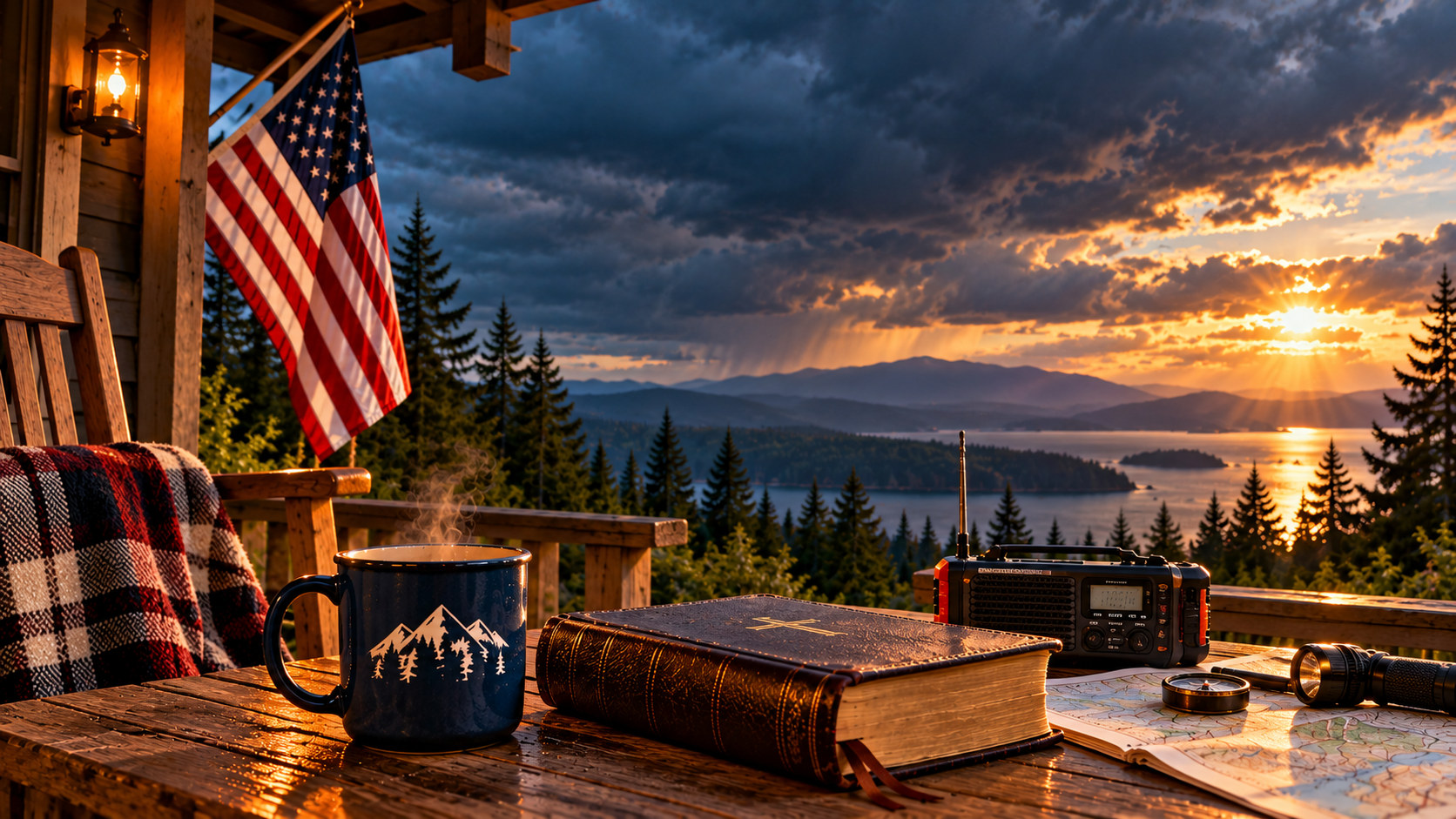
There’s something about sitting on the front porch with a cup of coffee that gives a man time to think. You hear the wind moving through the trees. Maybe there’s rain coming over the mountains. The American flag is hanging off the porch, and somewhere inside the house, your family is going about its day.
Everything seems normal. Then another government warning about emergency preparedness catches your attention. Another story about infrastructure threats. Another forecast about extreme weather. And a question creeps into your mind: Do they know something we don’t?
It’s a fair question. But before we believe every frightening prediction online, we ought to have a conversation. There’s a difference between being afraid of tomorrow and being responsible for the people God has placed in our care.
The Warnings Are Real. But What Are They Actually Saying?
We don’t need conspiracy theories to find legitimate reasons to prepare our households. FEMA encourages American families to maintain emergency supplies, develop communication plans, and understand local hazards. That includes water, nonperishable food, medications, flashlights, a radio, and other essentials. These are sensible precautions for emergencies that happen every year.
Source: Ready.gov, Build a Kit.
The National Oceanic and Atmospheric Administration (NOAA) publishes seasonal outlooks and hazards forecasts. Such reports can help families anticipate flooding, snow, wind, and other weather-related disruptions. A forecast is not a guarantee, but it gives us a chance to plan.
Sources: NOAA and NOAA U.S. Hazards Outlook.
The Pacific Northwest also faces long-term earthquake hazards, including the Cascadia subduction zone. Those hazards are scientifically documented, but that does not mean anyone knows the day or hour of the next major earthquake.
Source: USGS Earthquake Hazards Program.
A Warning Is Not a Prediction
When FEMA recommends an emergency kit, that does not mean it knows the country is about to collapse. When the military improves backup power, that does not prove a nationwide blackout is imminent. And when someone claims everything will fall apart after an election, we should ask: Who said it? Where is the original report? Does the evidence actually support the claim?
There’s nothing wrong with asking hard questions of government. In a free country, we ought to ask them. But we should be just as willing to question a frightening internet rumor as an official statement. Truth doesn’t become less important just because we’re worried.
What Happens When the Lights Go Out?
Imagine a major storm moves through your community. Trees fall, roads close, and power lines are damaged. Your refrigerator stops running. The internet goes down. A nearby gas station cannot process payments. And if your house depends on an electric well pump, you may lose running water too.
Now imagine the outage lasts three days. Then seven. You don’t need to believe in a nationwide disaster to recognize how difficult that could become. We rely on complicated systems working every day. When those systems fail, even temporarily, keeping a household functioning becomes personal.
That’s why preparation matters. Not because civilization is necessarily coming apart, but because the people sleeping under your roof depend on you to think ahead.
What Does the Bible Say About Preparing?
Proverbs 22:3 (World English Bible): “A prudent man sees danger, and hides himself; but the simple pass on, and suffer for it.”
Scripture calls us to prudence, not obsession. We also see Joseph in Genesis 41 advising the storage of food during years of abundance ahead of famine. Joseph’s circumstances involved a specific revelation from God. We shouldn’t treat today’s weather forecasts or internet predictions as having that same authority. Still, using seasons of abundance to prepare for future needs is wise stewardship.
If you can put aside a little food, store water, or learn practical skills, why not do it? If money is tight, start small. Faithful stewardship isn’t measured by the size of your pantry.
American Self-Reliance Was Never Meant to Be Selfish
I think about farmers helping neighbors bring in crops before a storm. Churches opening their doors when people need shelter. Volunteers showing up with chainsaws after a windstorm. That’s an American spirit worth preserving: not everyone looking out only for themselves, but people taking responsibility so they can help others.
A prepared family may be able to share a meal. A household with backup lighting might welcome a neighbor. Someone trained in first aid may help before responders arrive. Galatians 6:2 calls believers to bear one another’s burdens. We prepare our homes not merely to protect what belongs to us, but to remain capable of serving others.
But Where Does Faith Fit Into All This?
A full pantry cannot promise another sunrise. A generator cannot guarantee safety. Psalm 46:1 (World English Bible) says, “God is our refuge and strength, a very present help in trouble.” Our ultimate confidence belongs in God, not in government, technology, or our own ability to control tomorrow.
Trusting God does not mean ignoring responsibility. We lock our doors, maintain our cars, and teach our children how to be safe. Wisdom and faith are not enemies. Pray for protection. Exercise judgment. Take reasonable precautions. Remember that our hope in Christ does not depend on everything going according to plan.
Five Things Every Family Can Do This Week
1. Find out what your community is actually at risk for.
Look at local hazards, including storms, wildfires, earthquakes, and flooding. Start with Ready.gov, the National Weather Service, and local emergency management.
2. Take inventory of what you already have.
Check your pantry, flashlights, first aid supplies, and drinking water. Write down what’s missing before buying anything.
3. Make a basic family emergency plan.
Decide where to meet if separated, how to communicate when cell service is unreliable, and what to do if your home becomes unsafe.
4. Start building supplies gradually.
Add a few extra cans of food, water, a radio, or a flashlight during regular shopping. Maintain essential medications as medically appropriate. You don’t need to buy everything tomorrow. You need to begin.
5. Talk to your family without frightening them.
Children need reassurance, teamwork, and practical skills, not constant predictions of disaster. Let them help with a kit, practice an outage plan, and pray together.
The Question Isn’t Whether Something Bad Will Happen Tomorrow
Nobody knows exactly what tomorrow holds. It may bring another storm, a difficult season, or a perfectly ordinary day. We don’t need certainty about tomorrow to exercise responsibility today. We can listen to legitimate warnings without surrendering to sensationalism. We can love our country without pretending it’s invulnerable. We can prepare our families without being consumed by fear.
Tonight, look around your home and think about the people sitting at your dinner table. Ask yourself: If tomorrow were harder than today, have I done what I reasonably can to help my family face it? If the answer is no, you can start today.
Coming Next: Thirty Days Without a Store. Could Your Family Make It?
In Part 2 of Faithful, Free & Ready, we’ll look at what a family actually needs when the grocery store isn’t an option, the water stops running, and everyday conveniences aren’t available. No expensive survival fantasies. Just realistic planning and practical steps.
Because being prepared isn’t about predicting the future. It’s about being faithful with the responsibilities we have today.
Pull up a chair. Let’s talk about it.
A Conversation With Dad
Faith. Family. Life Lessons.
https://aconversationwithdad.com
Keep Exploring
Preparation is one part of responsible living. For another perspective on finding calm in uncertain times, read The Discipline of Being Still. You can also explore our Quiet Place for peaceful moments of reflection.

Leave a Reply