Somewhere in America, somebody is making plans around a video game. Friends are coordinating their schedules. Group chats are buzzing. People are remembering the first Grand Theft Auto they played, and others who have never touched the franchise are wondering why everyone is talking about it.
That’s the fascinating thing about the arrival of Grand Theft Auto VI. The story isn’t only about what happens on a screen. It’s about what happens between people because of it.
And the more I think about it, the more I realize we’ve been sharing moments like this for generations. The entertainment changes. The human connection doesn’t.
GTA VI: A Billion-Dollar Cultural Moment
Ahead of the planned November 19, 2026 launch, third-party estimates have suggested more than 11 million GTA VI preorders and roughly $1 billion in associated sales. Those figures are estimates, not confirmed publisher totals. Still, they illustrate the anticipation surrounding a game people have waited years to experience.
Rockstar’s new open-world crime story follows Jason and Lucia through Vice City and the fictional state of Leonida, inspired by Florida. Players can expect driving, exploration, story missions, an elaborate fictional world and the satire for which the series is known. The precise range of optional activities and online features should be confirmed after release, rather than assumed from rumors.
But here’s what interests me most: millions of people are preparing to experience this at roughly the same time. They’ll compare discoveries, tell stories, trade advice, laugh at unexpected moments and talk about it with friends who live hundreds of miles away. Some will never play the game at all, but they’ll still recognize the moment.
The Invisible Thread Running Through American Pop Culture
Think about the biggest entertainment events in American history. At first glance, Beatlemania, Star Wars, Michael Jackson, Nintendo, Harry Potter and GTA VI have very little in common. Different generations. Different technologies. Different audiences.
But look a little closer. Each created something people could experience together. Each gave strangers a conversation starter. Each became a memory that people could return to years later. That’s the thread.
1964: When America Gathered Around the Television
When the Beatles appeared on The Ed Sullivan Show in 1964, an estimated 73 million people watched. Imagine the conversations the next morning: in classrooms, offices, kitchens and neighborhood streets. The performance lasted only a short time. The shared memory lasted decades.
The Beatles weren’t simply music people listened to. They became something parents and children debated, friends bonded over and an entire generation remembered together.
1977: Standing in Line for a Galaxy Far, Far Away
When Star Wars arrived in theaters, waiting in line was part of the adventure. You might stand beside complete strangers, but for a little while everyone had the same goal: get inside and see what all the excitement was about.
Afterward came the conversations, the toys, the make-believe adventures in backyards and the friendships built around a shared imaginary universe. Decades later, parents could introduce their children to the same characters and hear the same music. An entertainment event had become a bridge between generations.
The 1980s: MTV, Thriller and the Nintendo Living Room
This one hits close to home for me. Growing up in the 1980s, entertainment wasn’t something we could summon instantly on a phone. We waited for songs on the radio. We talked about the latest music videos. Michael Jackson’s Thriller wasn’t just a song or a video; it was something people watched, imitated and discussed.
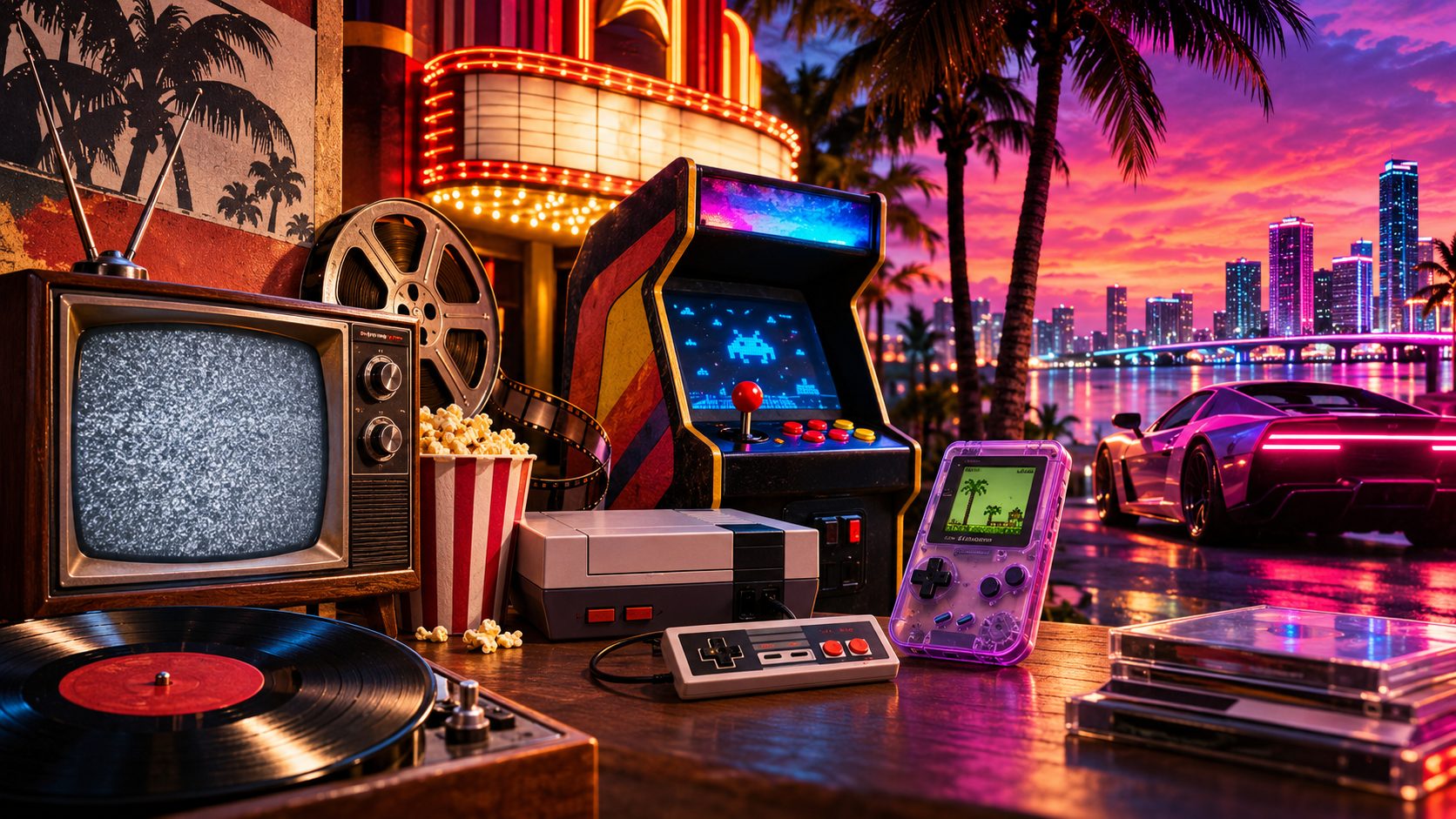
And then there was Nintendo. A friend came over, somebody grabbed the second controller, and suddenly an ordinary afternoon became a memory. We traded secrets at school and celebrated when someone finally beat a level the rest of us couldn’t figure out. Sometimes the best part of the game was simply who was sitting beside you.
The 1990s: Dinosaurs, Pokémon and Movie Nights
Jurassic Park gave families a reason to head to the theater together. Pokémon gave children a shared language of characters, cards and trades. Titanic sparked conversations that reached far beyond movie fans. These weren’t identical experiences, but they gave people common reference points.
A trading card could start a friendship. A movie could become a family tradition. Years later, a familiar theme song or character could bring the whole experience rushing back.
The 2000s: Midnight Releases and the Joy of Waiting Together
Harry Potter book launches and major game releases such as Halo 2 turned anticipation into a social occasion. People dressed up, stood in lines, debated predictions and counted down together. The release itself was exciting, but so was being surrounded by people who cared about the same thing.
That’s something easy to overlook in our on-demand world: sometimes the waiting is part of what makes a memory stick.
The 2010s: GTA V, Avengers and the Online Conversation
Grand Theft Auto V reportedly generated $1 billion in retail sales in just three days in 2013. Avengers: Endgame brought moviegoers together for the payoff to years of storytelling. And social media gave these experiences another life. The conversation no longer ended when the theater lights came up or the console shut off.
Friends could share reactions instantly. People on opposite sides of the country could celebrate the same surprise. The campfire had become digital, but people were still gathering around it.
What GTA VI Changes—and What It Doesn’t
The biggest difference today is reach. One person will play GTA VI, another will watch a livestream, another will share a funny clip, and another will hear about it at work. They may participate in completely different ways, yet still feel connected to the same cultural moment.
Of course, not every pop culture phenomenon is for every family. GTA’s adult themes are one reason some parents won’t want their children playing it. Recognizing the cultural impact of a game doesn’t require endorsing all of its content.
And not every phenomenon unites everyone. Some people love it, some dislike it and some simply don’t care. Yet even disagreement can reveal how deeply entertainment becomes woven into the conversations of everyday life.
The Real Legacy Isn’t the Sales Record
A billion dollars makes a headline. But the number isn’t what people will remember twenty years from now.
They’ll remember the friend who stayed up too late with them. The sibling who always knew the shortcut. The parent who took them to a midnight release. The theater full of people cheering. The song everybody seemed to know. The first time a fictional world felt enormous.
I think about the memories I carry from my own childhood. I can remember games and movies, sure. But what makes those memories special is the people attached to them. A living room. A school hallway. A conversation with a friend. A moment when we all seemed to be talking about the same thing.
And now I get to watch another generation create those memories. Maybe years from now my daughter will tell me about the pop culture moment that defined her childhood, and I’ll have the chance to tell her about mine. We might not love the same music, movies or games. But we’ll understand the excitement.
That’s why the thread matters. Pop culture gives us common ground across ages and distances. It creates little pieces of history that belong not just to celebrities or corporations, but to the ordinary people who experienced them together.
From Beatlemania to Vice City
GTA VI may break records. It may dominate conversations, livestreams and social media for months. Eventually another phenomenon will take its place, just as every generation has found something new to get excited about.
But the pattern will remain. We’ll anticipate something together. We’ll experience it in our own ways. We’ll talk about it with people we care about. And years later, somebody will mention it and we’ll smile because we remember exactly where we were—and who was there with us.
The technology changes. The stories change. The friendships and memories are what connect it all.
The Conversation Continues
What pop culture moment brings back the strongest memories for you? Was it watching the Beatles, seeing Star Wars in theaters, trading Pokémon cards, playing Nintendo with a friend, or waiting in line for a midnight release? More importantly, who shared that moment with you? Pull up a chair. The conversation is always open.
Editor’s note: GTA VI preorder figures cited here are third-party estimates rather than official publisher-confirmed sales. Details may change as release information becomes available.
Leave a Reply