Every family has stories that seem to come out at the same time every year.
Somebody remembers the road trip where everything went wrong. Somebody else tells the story of a grandparent who fixed nearly anything with patience and a few well-chosen tools. There may be a tale about a first job, a family business, a hard season, or a moment when somebody showed up just when help was needed.
We laugh, we argue over the details, and we promise that we have heard this one before. Then, one day, the person who always told the story is no longer there to tell it.
That is why family stories are worth preserving.
History Is Made of Ordinary People
When we think about history, we often picture presidents, battles, inventions, and dates printed in textbooks. Those things matter, but a family’s history is also made of ordinary decisions: who moved for work, how people managed during a difficult year, what traditions they carried from one place to another, and what they did when life did not go according to plan.
Those details help children understand that the people who came before them were more than names on a family tree. They were people with hopes, fears, strengths, flaws, and responsibilities. They had to make choices without knowing exactly how everything would turn out.
Family stories can give the next generation a sense of connection. They can also help us see that courage does not always look dramatic and that resilience is often built through ordinary persistence.
Tell the Truth, Not Just the Pretty Version
Preserving family history does not mean polishing every ancestor into a hero. Families are made of imperfect people. Some stories carry joy, and others carry regret, conflict, or painful lessons.
We should tell those stories with care, especially when they involve living people or private matters. But honesty matters. If every story is edited until nobody ever made a mistake, children may come away believing that real people cannot grow or that family love depends on pretending.
A truthful story can acknowledge harm without reducing a person to the worst thing they ever did. It can honor sacrifice while admitting that a decision had consequences. It can teach a lesson without turning somebody’s pain into entertainment.
Ask Before the Opportunity Is Gone
You do not need special equipment or a formal genealogy project. Start by asking an older relative a few questions and writing down the answers.
What was your childhood home like? What did a normal workday look like? What was the hardest season you remember? Who taught you something you never forgot? What family tradition mattered most to you? What do you wish you had understood earlier in life?
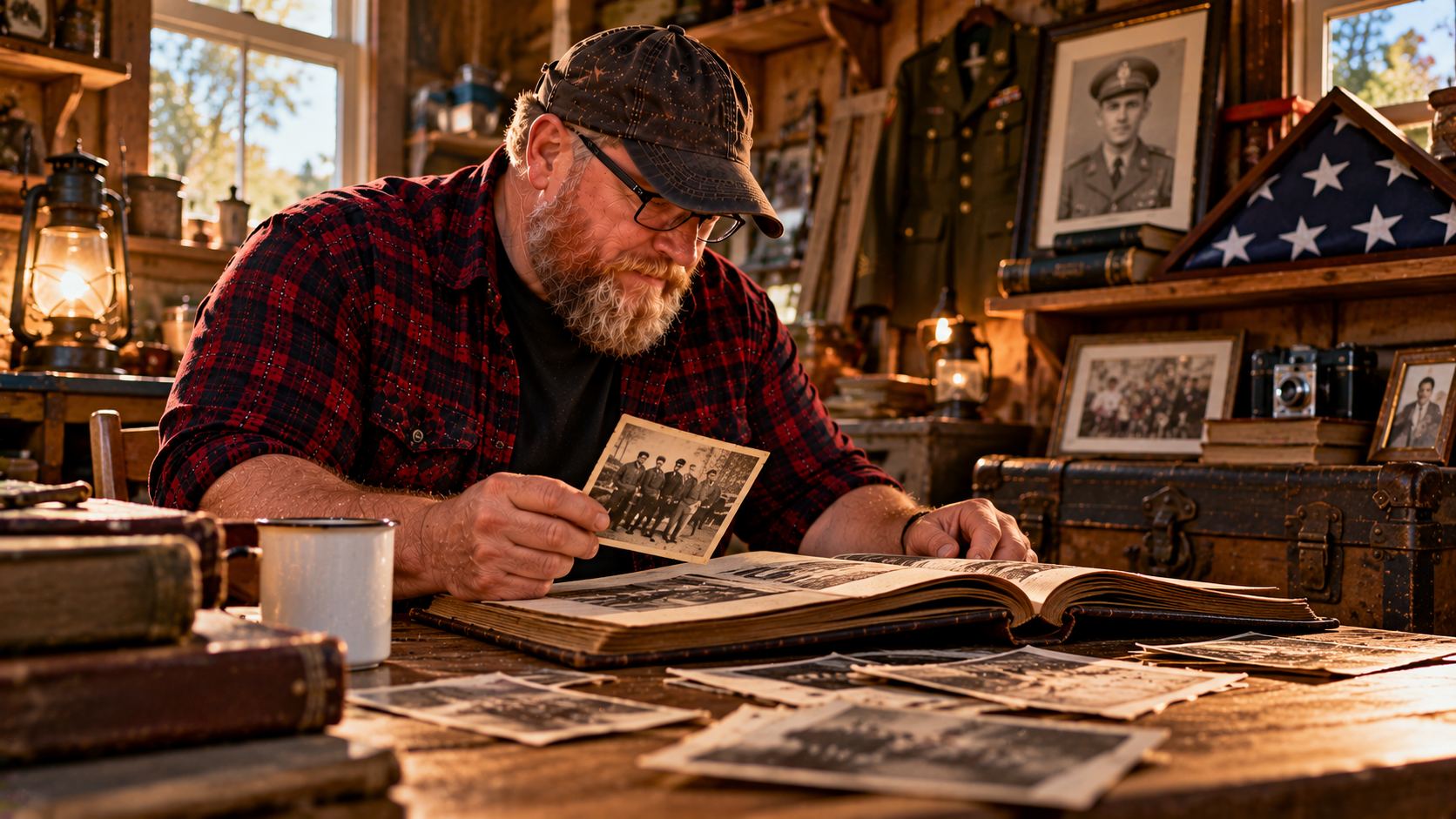
If the person is comfortable with it, record the conversation on your phone. Write down names, dates, locations, and the little details that make a story come alive. Label old photographs while someone still remembers who is in them. Save recipes with the story of who made them and why they mattered.
Make Room for the Next Generation
Children may not be fascinated by every story today. That is all right. A story can be planted long before someone understands its value. Keep the telling natural. Let them ask questions. Invite them to add their own memories as they grow.
You can also create new family traditions worth remembering. Take a yearly photograph in the same place. Write down the funny things children say. Keep a simple journal of important changes, ordinary victories, and lessons learned. The goal is not to build a museum. It is to leave a record of real life.
Pass Along More Than Names
A family legacy is not only a list of who was born where. It includes the values people tried to live by, the mistakes they learned from, the ways they cared for one another, and the questions they left for the next generation to consider.
We cannot preserve every memory. But we can rescue some of them from disappearing simply because nobody thought to ask.
So the next time an older relative starts telling a familiar story, resist the urge to rush past it. Pull up a chair. Ask another question. Write it down afterward.
One day, that ordinary story may be a precious part of what remains.
Same conversations. A brighter tomorrow.
For a related reflection, read about the legacy we leave in ordinary days.
Related conversations: When Your Children Are Watching.
Leave a Reply